Fusion reactors in orbit: scientists propose a new energy source for space
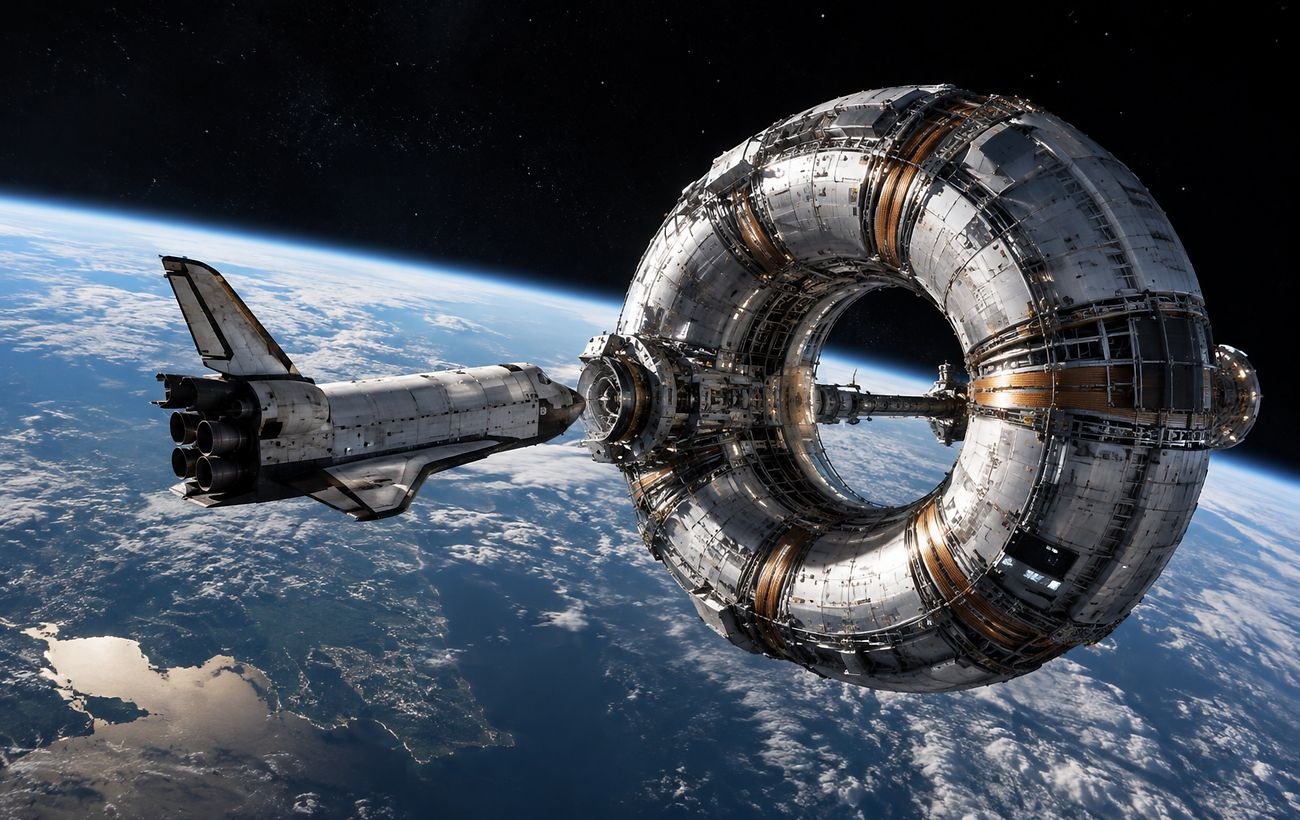
Researchers are exploring the possibility of placing fusion reactors in space to power future deep-space missions.
 💡Tech
Photo: RBC-Ukraine
Key points
- Deployment of tokamaks in geostationary orbit
- Advantages of microgravity for fusion systems
- Alternative to fission reactors for space exploration
The future of fusion energy in space
The scientific community is exploring the concept of deploying fusion reactors into Earth's orbit. According to a study published in ResearchGate, placing tokamaks in space could solve the energy supply problems for long-range missions where solar panels become less effective.
Physicist Yang Bai from the Spacefaring Research Institute highlights several advantages of orbital deployment. Microgravity reduces mechanical stress on the reactor structure, while the lack of atmospheric pressure allows for the design of lighter vacuum chambers. Additionally, the vacuum of space provides an ideal environment for cooling systems.
Technological challenges and plans
In his research, Bai proposes a 1-gigawatt tokamak design capable of powering a million homes or large orbital industrial facilities. Beyond magnetic plasma confinement, the study also considers using high-powered lasers to initiate fusion reactions in space.
«Currently, these projects are largely theoretical in nature», — admits Yang Bai.
Today, most spacecraft rely on solar arrays or fission reactors, the latter of which raise safety concerns due to radioactive materials. Controlled nuclear fusion is viewed as a safer and more powerful alternative for sustaining human presence beyond Earth.
Source RBC-Ukraine — rbc.ua/ukr/news/termoyaderni-reaktori-hochut-vidpraviti-kosmos-1795… ↗
Read next
 🛡️Security
Russian corvette 'Merkury' reportedly hit by Ukrainian drones in Libya
An explosion occurred on a Russian warship in the port of Benghazi, potentially caused by a maritime drone strike.
 💼Economy
Global warming: Scientists revive 40,000-year-old bacteria from permafrost
Researchers from the University of Colorado have demonstrated that microorganisms trapped in permafrost can rapidly regain activity after thawing.
 🎭Culture & Sport
Ukrainian gardener grows a 350-kilogram giant pumpkin
A resident of the Cherkasy region grew a record-breaking 350 kg pumpkin and shared it for free with dozens of people.
 🏛️Politics
US Director of National Intelligence: Putin is not America's friend regarding Ukraine
Jay Clayton has officially distanced himself from Donald Trump's rhetoric regarding friendship with the Russian leader, emphasizing the hostile nature of Russia's actions…
 🛡️Security
Consequences of Russian attack on Dymer: death toll rises to eight
Rescue teams are finishing the debris removal in Dymer, Kyiv region, where eight people have died following an enemy strike.
 👥Society
Clashes at Kyiv Pechersk Lavra: Police Launch Investigation
A physical confrontation took place at the Kyiv Pechersk Lavra due to disputes over church property. Authorities have registered official complaints and are investigating…