Archaeological Breakthrough in Guatemala: Dozens of Maya Deity Sculptures Found in Jungle
Researchers in the ancient city of El Mirador have uncovered approximately 40 stucco heads of Maya deities dating back to 600–900 AD using LiDAR technology.
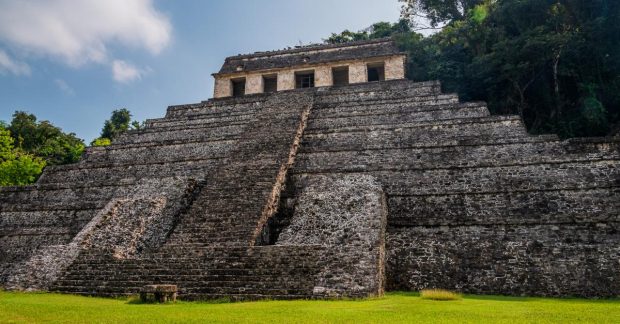 🚨Events
Photo: UNIAN
Key points
- About 40 Maya deity sculptures from 600–900 AD were discovered.
- LiDAR technology revealed objects hidden under dense jungle canopy.
- El Mirador was a major ancient center with a population of 200,000.
In the heart of the Guatemalan jungle, within the ancient city-state of El Mirador, archaeologists have made a significant discovery. Utilizing modern remote sensing methods, researchers found approximately 40 intact sculptures and fragments of heads depicting deities of the Maya civilization. These artifacts, crafted from plaster and stucco, date back to the Late Classic period (600–900 AD), offering a fresh perspective on the religious and cultural life of that era.
Technology Serving History
The key factor in this success was LiDAR (Light Detection and Ranging) technology. It works by emitting laser pulses that penetrate dense vegetation to create an accurate three-dimensional map of the surface. This allowed scientists to 'see' objects hidden beneath centuries of jungle growth. In addition to the sculptures, an extensive network of roads and a residential zone south of the city center were discovered, confirming the settlement's massive scale.
Researcher Douglas Mauricio noted that most of the finds are currently undergoing restoration. Only a few specimens have been documented in laboratory settings in Guatemala City. Meanwhile, another scientist, Enrique Hernandez, emphasized the importance of further exploring the area to test the hypothesis that El Mirador served as a dominant regional power center.
The Grandeur of El Mirador
- The city was founded approximately between 600 and 300 BC.
- Its peak occurred between 300 BC and 250 AD.
- It is home to La Danta, one of the world's tallest pyramids (72 meters).
- Experts estimate the city's population reached up to 200,000 people.
This discovery adds to the narrative of the Maya decline. Previous studies suggested environmental issues, such as mercury water pollution from the use of red pigments. The new findings of sculptures indicate that even in later periods, the city maintained its status as a religious hub despite the challenges faced by the civilization.
Source UNIAN — unian.ua/science/dzhungli-prihovuvali-davnyu-tayemnicyu-arheologi-z… ↗
Read next
 🛡️Security
Major fire breaks out at oil refinery in Novoshakhtinsk, Russia
A large fire has been reported in the Rostov region following a series of overnight explosions near a major oil refinery and fuel terminal.
 🛡️Security
Aftermath of the attack on Dymer: death toll rises to nine
Rescue operations are ongoing in the town of Dymer following a Russian strike. A 79-year-old woman was pulled from the rubble, but the number of fatalities has increased.
 🛡️Security
Power restored in Rivne region following enemy attack
Electricity supply has been fully restored in the Sarny district of the Rivne region after the November 20 attack.
 👥Society
Autumn Rose Care: Expert Advice for Vinnytsia Gardeners
Experts explain why it is better to delay radical rose pruning until after the first steady frosts.
 🇺🇦Ukraine
Estonia comments on incident involving Russian vessel in Gulf of Finland
Estonian Foreign Minister Margus Tsahkna stated that the strike on a Russian cargo ship is a consequence of Ukraine's right to self-defense.
 🛡️Security
Rescue operation in Dymer: 89-year-old woman pulled from rubble
Search and rescue operations continue in the Kyiv region after an enemy drone strike on a residential building. The death toll has risen to nine.